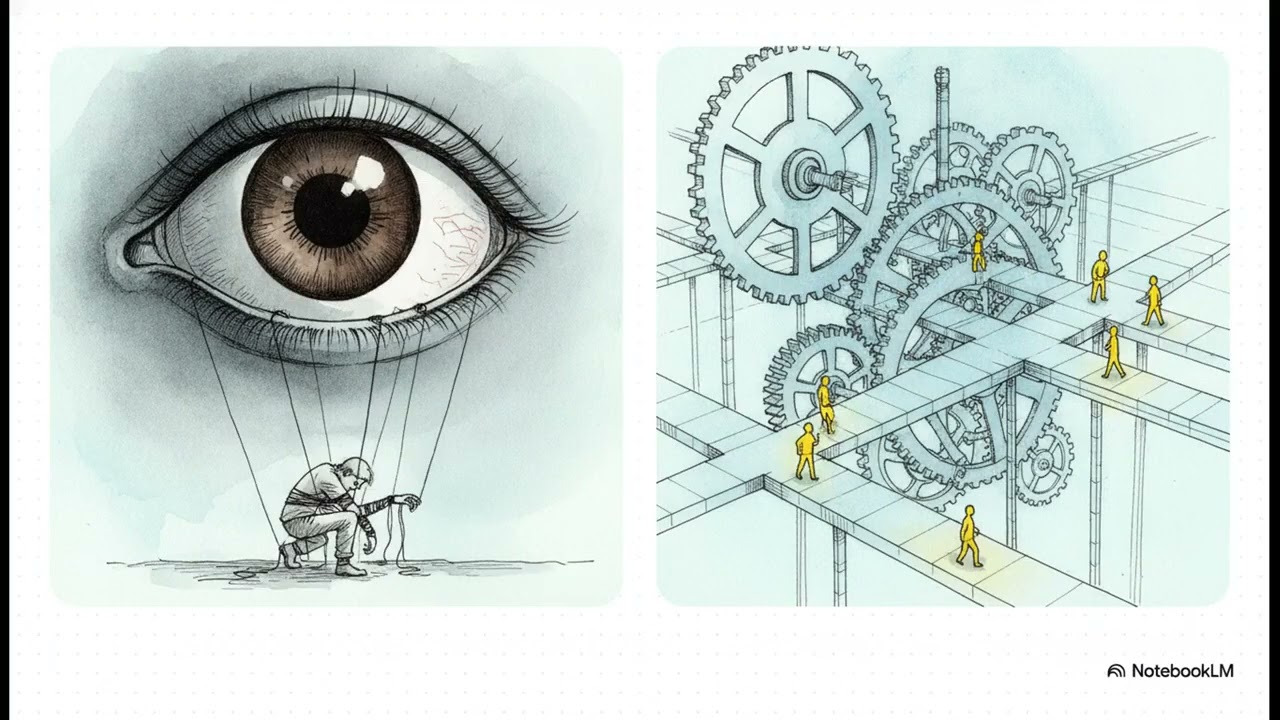
Shadow IT is usually classified as a security failure and answered with prohibition. The classification is wrong, and the response follows the classification. When the sanctioned path runs slower than the work, people route around it, and that routing is a signal about where decision rights sit rather than evidence of indiscipline.
Rigid governance manufactures the thing it fears
Centralized approval removes real-time risk ownership from the people holding the situational context needed to judge it. That ownership transfers to a committee that does not hold the context and cannot acquire it at the speed the decision requires.
The committee therefore applies a general rule, because a general rule is the only instrument available without specific knowledge. The general rule does not fit the specific case. The operator, who can see that it does not fit, now chooses between a process that blocks the work and a workaround that completes it.
Leadership meanwhile observes dashboards reporting green. Those indicators track process compliance rather than the condition they claim to represent, which is why the reassurance they provide is unrelated to actual exposure.
The shadow organization is a structural output
Latency accumulates in any approval chain, and it accumulates fastest where the chain was designed for a different risk profile than the work now carries. Where the official path reliably costs more time than the task itself, an unofficial path forms to absorb the difference.
That unofficial path is the shadow organization. It is a structural consequence rather than a cultural failing, and it appears in disciplined organizations as readily as in careless ones. The variable is process latency, not employee character.
Prohibition does not remove the pressure that created it. Prohibition removes visibility into it, which converts a known workaround into an unknown one. The risk profile worsens while the compliance report improves.
Normalization of deviance
The sociologist Diane Vaughan described the process by which the boundary of acceptable behavior widens incrementally. Each deviation that produces no immediate failure becomes evidence that the deviation is safe, and the revised boundary becomes the new baseline for the next decision.
Vulnerability accumulates quietly under this mechanism. The organization is not aware of drifting, because at every individual step the drift was small and the outcome was acceptable. Nobody made a reckless decision, and the aggregate position is nonetheless reckless.
This is why shadow IT resists periodic crackdowns. A crackdown resets behavior without resetting the latency that produced it, so the drift restarts from the same origin on the same gradient.
Systems and surveillance are opposite responses
Surveillance assumes people are the risk and answers with monitoring, approval gates, and manual review. Every action requires human inspection, which produces a hidden factory of rework and delay while addressing none of the underlying condition.
Systems assume the structure is the risk. Security embedded into the default path means the safe route and the fast route are the same route, and compliance stops competing with delivery for the same hour.
The distinction is testable. Where a control requires someone to remember it, the control is surveillance. Where a control operates whether or not anyone remembers, it is a system, and only the second survives sustained time pressure.
Governed activation in practice
Governed activation is the operating pattern that replaces gate-based control. It has four components, and the value comes from installing all four rather than the strongest one.
Explicit decision rights come first, meaning every recurring category of technology decision has a named owner rather than a committee. Second, protective controls are built into execution rather than layered on top of it, so the safe path requires no additional step. Third, each outcome carries a single named owner who holds the consequence. Fourth, a review rhythm runs on a fixed schedule rather than on request.
The fourth component does the quiet work. A scheduled review removes the incentive to avoid raising an issue, because raising it costs nothing that waiting would not also cost.
Frameworks that describe the same structure
The RACI model separates responsible, accountable, consulted, and informed roles, and its practical value here is forcing a single accountable name onto each decision class. Most implementations dilute that by assigning accountability to a group, which reproduces the committee problem inside the framework meant to prevent it.
Zero-trust architecture makes the same structural argument in security vocabulary. It assumes the perimeter will be crossed and designs for verified access at each point rather than for a single guarded boundary. The organizational parallel is exact. Assume the process will be routed around, and design the sanctioned path so routing around it produces no advantage.
The Theory of Constraints supplies the sequencing logic. Improving anything other than the binding constraint produces no throughput gain, and in most approval structures the binding constraint is decision latency rather than technical capacity.
Where the latency actually accumulates
Approval latency concentrates in three places, and measuring them is cheaper than debating them. Working through the three in order usually locates the binding one within an afternoon.
The first is consent depth, meaning how many separate people must agree before work may begin. Each additional consent adds waiting time rather than judgment quality, and the marginal reviewer contributes least. Count the consents on a recent request and compare that number against the request’s actual exposure.
The second is context distance, meaning how far the decision travels from the person who understands the situation. Every step of that distance requires a translation, and translations lose detail reliably. Shorten the distance where possible and document the interface where the distance is unavoidable.
The third is queue rule absence, meaning whether incoming exception requests are ordered by a stated rule or by who asked most recently. Without a rule, urgency substitutes for importance and the loudest request wins. Aligning the queue to stated risk criteria restores order without adding reviewers.
Alignment is what makes the sanctioned path faster
Operational excellence in this domain is not stricter control. It is the condition where the fastest available route is also the approved one, which removes the incentive that produces shadow systems in the first place.
That condition requires shared agreement about which risks actually matter. Where security, operations, and delivery hold different risk models, the organization enforces all three simultaneously and the combined path becomes slower than any single one would be. Coherence between those views does more for stakeholder value than any additional control layer.
Continuity holds the gain. A path optimized once and left unmonitored accumulates new consent steps, because each individual addition looks reasonable in isolation. Periodic re-examination of the path itself, rather than of compliance with it, is what prevents the slow return of the original condition.
Conditional rules for routing decisions
Where a decision requires judgment about a specific situation, route it to a single named risk owner rather than to a committee. Committees are appropriate for policy and structurally unsuited to instances.
Where a compliance control requires a separate manual action to complete, the control is not embedded and will be bypassed under time pressure. Rebuild it into the default path rather than reinforcing the reminder.
Where ambiguity exists about who may approve an exception, speed collapses regardless of how the remainder of the process is designed. Removing the ambiguity restores it, and this is usually a documentation task rather than a reorganization.
Speed is a safety feature
Organizational safety does not come from performative committees or accumulated documentation. It comes from the capacity to detect a problem and act on it before it compounds, and that capacity is a direct function of decision speed.
The inversion is worth stating plainly. A slow organization is not a careful one. It is an organization whose response time to a genuine problem is also slow, and the same latency that delays a software purchase delays an incident response.
Rigor is compatible with speed where the rigor lives in the structure rather than in the review. Calm, consistent, pre-decided rules produce faster and better outcomes than case-by-case deliberation under pressure.
Structure protects the operators inside it
The argument for correcting this is not only exposure management. Staff working around a process carry personal risk for a decision the structure declined to make, and they carry it without acknowledgment or protection.
That erodes trust and human capital simultaneously. People will absorb a demanding workload. They will not indefinitely absorb responsibility for outcomes they were never authorized to control. Servant leadership expressed operationally means placing the decision where the context sits, and then standing behind it.
Shared understanding of who decides what is what allows technical staff to raise problems early. Where that understanding is absent, raising a problem carries ambiguous consequence, and the rational response is silence.
The question worth asking honestly
The useful examination is not how to eliminate shadow IT, because shadow IT is a symptom and symptoms are poor targets. It is whether the sanctioned path is faster than the workaround, because that ratio determines behavior more reliably than any policy.
Compliance rituals should be assessed against the same standard as any other process. Ask whether each one protects the business from material risk, or protects leadership from discomfort about risk it cannot see. The two feel identical from inside a review meeting and produce opposite outcomes.
Governance that compounds is governance that makes the correct action the easy action. Every control built that way accumulates, and the accumulated effect is an organization where speed and safety stop being a trade.
Watch the full explainer
Related
Further material on operations and fractional executive leadership from Kamyar Shah: kamyarshah.com
For an operational diagnosis of a specific situation, the free diagnostic is at businessconsultant.services