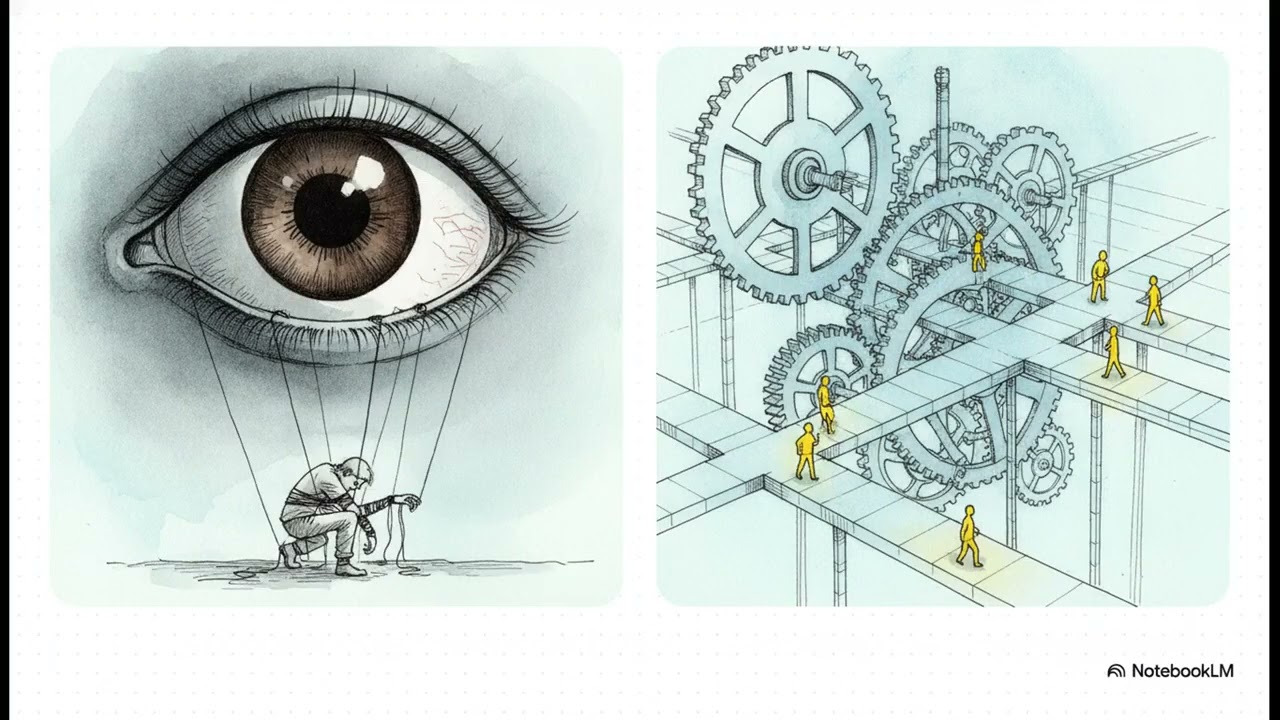
Shadow IT is usually classified as a security failure and answered with prohibition. The classification is wrong. When the sanctioned path is slower than the work, people route around it, and that routing is a signal about where decision rights sit rather than evidence of indiscipline.
Rigid governance manufactures the thing it fears
Centralized approval removes real-time risk ownership from the people holding the situational context needed to judge it, and transfers it to a committee that does not hold that context.
The committee cannot assess the specific risk, so it applies a general rule. The general rule does not fit the specific case. The operator, who can see that it does not fit, now faces a choice between a process that blocks the work and a workaround that completes it.
Leadership meanwhile observes dashboards showing green. Those indicators are not connected to the mechanism they claim to represent.
The shadow organization
Latency accumulates. Where the official path reliably costs more time than the work itself, an unofficial path forms to absorb the difference. That is the shadow organization, and it is a structural consequence rather than a cultural one.
Prohibition does not remove the pressure that created it. It removes visibility into it.
Normalization of deviance
The sociologist Diane Vaughan described the process by which the boundary of acceptable behavior widens incrementally. Because catastrophic failure does not follow immediately from the first deviation, each successful deviation becomes evidence that the deviation is safe.
Vulnerability accumulates quietly. The organization is not aware of drifting, because at every individual step the drift was small and the outcome was fine.
Systems and surveillance are different responses
Surveillance assumes people are the risk and answers with monitoring, approval gates, and manual review. Every action requires human inspection, which produces a hidden factory of rework and delay while doing little about the underlying condition.
Systems assume the structure is the risk. Security embedded into the default path means the safe route and the fast route are the same route, and compliance stops competing with delivery.
Governed activation is the practical form: explicit decision rights, workflows where the protective control is built into execution rather than layered on top, a single named owner for each outcome, and a review rhythm that runs on schedule rather than on request.
Conditional rules for routing decisions
Where a decision requires judgment about a specific situation, route it to a single named risk owner rather than to a committee.
Where a compliance control requires a separate manual action to complete, the control is not embedded and will be bypassed under time pressure. Rebuild it into the default path.
Where ambiguity exists about who may approve an exception, speed collapses regardless of how the rest of the process is designed. Removing the ambiguity restores it.
Speed is a safety feature
Organizational safety does not come from performative committees or accumulated documentation. It comes from the ability to detect a problem and act on it before it compounds, which is a function of decision speed.
The question worth asking honestly: whether the current compliance rituals protect the business from material risk, or protect leadership from discomfort about risk it cannot see.
Watch the full explainer
Related
Further material on operations and fractional executive leadership from Kamyar Shah: kamyarshah.com
For an operational diagnosis of a specific situation, the free diagnostic is at businessconsultant.services